ADA Portable Bathroom Rental: Accessible Route Demands Made Simple
If you have ever before tried to place portable restrooms for an event, a public celebration, or a momentary workspace, you already recognize just how fast a basic service can come to be a logistics puzzle. The system itself is only component of the photo. Where it rests, just how someone reaches it, and whether that path really works for a mobility device individual are typically the information that get missed out on until the last minute.
That is where obtainable course requirements matter.
When people look for an ada mobile toilet rental, they commonly concentrate on the system dimension, the door, or whether the vendor calls it wheelchair available. Those attributes matter, but they are insufficient on their own. An ada obtainable portable washroom has to be obtainable. If a person arrives and the only path is soft mud, a curb without a certified ramp, deep crushed rock, or a sloped makeshift platform, the bathroom may exist yet not meaningfully accessible.
The government standard for this in the United States originates from the 2010 ADA Criteria for Accessible Design, as translated by the Department of Justice and the Access Board. For short-term configurations, consisting of mobile systems organized together at events, the ease of access policies still use. That shocks some coordinators who assume "short-lived" indicates adaptable. It does not, a minimum of not in the method many people hope.
What complies with is the sensible version of the rulebook, fixated the component that creates the most complication: the route to the restroom.
The path belongs to the restroom
This is the initial frame of mind shift that makes the rest easier. An ada mobile toilet is not just the box you rent. Ease of access includes the experience of receiving from the surrounding site to the entrance, getting in the unit, and utilizing it with the called for clearances and navigating space.
In plain terms, if the system is technically certified inside however stranded at the end of a hard to reach path, the setup is still a problem.
The Access Board's advice makes 2 points especially essential below. First, accessible portable toilet systems need to have an obtainable path and entry. Second, if ramps or touchdowns are needed, those aspects also have to abide by ADA technological demands. That is where several otherwise well-meaning arrangements fall apart. A site group positions a larger ada compliant portable commode at the edge of a verdant field, notifications a quality modification, and improvisates with plywood or a steep short-lived ramp. The reasoning is functional, but the result can be pointless or unsafe.
I have actually seen planners invest a great deal of time contrasting unit models, after that position the easily accessible one in the most awful area since it was "out of the way" or easier for the delivery van. That generally indicates a longer course, even more irregular ground, or a path that worsens once foot website traffic and weather start working with it. The accessible system ought to be dealt with as a concern positioning, not an afterthought.
How lots of obtainable units are required in a cluster
This concern turns up practically every single time mobile washrooms are gotten in volume.
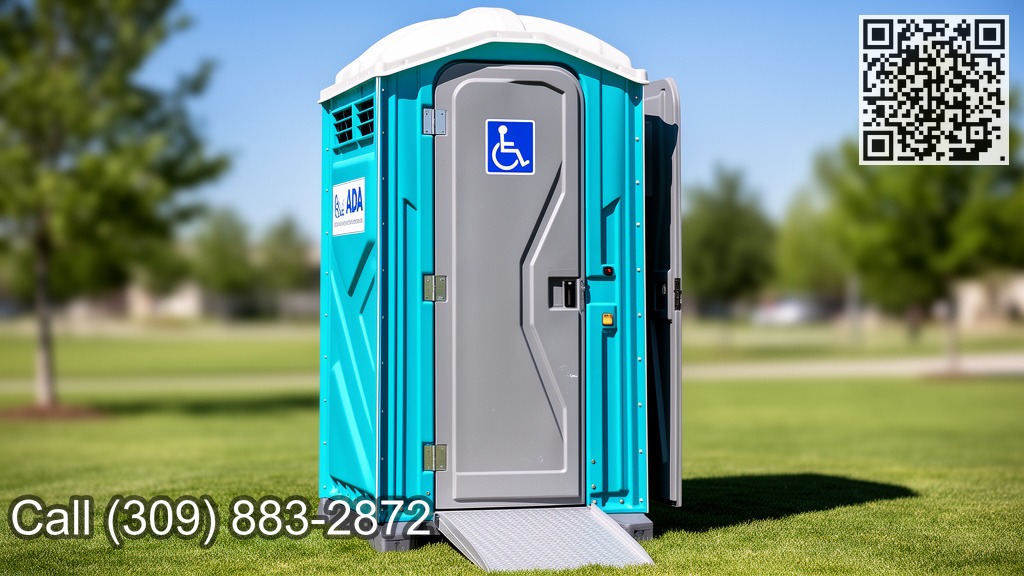
For clusters of mobile single-user bathroom systems, a minimum of 5 percent of the units in each collection should come. The Accessibility Board has explained that this applies even at short-term events. So if restrooms are grouped together, the obtainable matter is not optional even if the installment only lasts a day or a weekend.
That 5 percent policy is one reason it helps to assume in terms of clusters as opposed to the entire site in the abstract. If bathrooms are divided in between different areas, each collection requires to be checked out on its own. A common mistake is placing all accessible systems in one central zone while various other restroom groups across the site have none. The advice points you back to the collection itself.
For anyone arranging ada certified portable washrooms, this is not simply a paperwork concern. It directly affects traveling distance and dignity. People need to not need to leave the location they are making use of, cross a difficult website, and search for the one accessible option concealed someplace else.
What "accessible route" really suggests on a momentary site
The expression seems technical, but its practical definition is uncomplicated. The course must allow a person with a disability to reach the ada compliant obtainable mobile toilet and enter it. If a ramp or touchdown becomes part of that course, it must fulfill ADA technological needs. The same holds true for the entrance.
The law and guidance are described, but on the ground, easily accessible path planning often comes down to truthful observation. Ask yourself just how the course behaves under actual conditions, not ideal ones.
A path that looks fine at 8 a.m. On a completely dry configuration day may end up being hard by midday if the ground softens, wires go across the course, trash bins narrow the method, or the line to neighboring giving ins splashes right into the steering area. Short-term websites change by the hour. Availability needs to survive those changes.
A couple of problems are worthy of unique interest because they are so usually overlooked:
- Soft or unsteady ground in between the primary circulation course and the available unit
- Improvised ramps or systems that were never checked against ADA technological requirements
- Doors blocked by fencing, stanchions, or crowd overflow
- Grade modifications that appear small theoretically yet create a genuine obstacle at the device entrance
- Accessible devices put where service vehicles can reach them, however individuals cannot
That last one is extra typical than individuals expect. Distribution accessibility and individual access are not the same point. A vehicle can back right into locations that a wheelchair user can not securely reach.
The entrance matters just as long as the path
An ada certified mobile commode can not quit being accessible at the doorway. The assistance is clear that mobile obtainable systems need an accessible entrance, and the system should additionally please suitable toilet-room technological needs. That consists of turning room, fixture clearances, door navigating clearances, and applicable grab-bar and water-closet clearance rules.
This matters since some individuals use "ADA unit" as a generic label for any larger mobile washroom. Size alone does not make it certified. A roomy interior that does not have the needed clearances is not nearly enough. A wide-looking door that does not supply the required handling space is not enough either.
This is one reason experienced site organizers ask vendors precise inquiries instead of relying on broad sales language. Terms like ada handicap accessible portable toilet or ada-compliant mobile washrooms get used in marketing, but what you really require is a system that fulfills the relevant technical needs and is positioned so those attributes can be used.
The functional lesson is simple: never ever different the unit from the placement plan. They rise or fall together.
Why course preparation has a tendency to break down
Most failures are not caused by negative intent. They originate from pressed timelines, changing website conditions, https://kameronhart586.nexorafield.com/posts/ada-certified-portable-bathroom-policy-for-public-and-temporary-use and an incorrect sense that "close sufficient" will certainly be acceptable for one brief event.
Here is what usually occurs. The rental order is put, the matter is confirmed, and the site map gets revised a number of times. A food supplier needs even more room. Secure fencing shifts. The generator area expands. A stage vehicle takes over the flattest patch of ground. By the time the portable commodes are supplied, the obtainable route that seemed apparent on the draft strategy no longer exists in a convenient form.
I have actually seen occasion groups fix twenty functional problems in a morning and still miss the one path a wheelchair customer would really require. That is not since access is unknown. It is because short-term sites are busy, and details that influence a smaller sized share of guests are too often left for completion. The difficulty is, available path concerns are hardest to deal with at the end. Once devices are dropped, fence is installed, and traffic patterns are established, every adjustment gets more expensive and much more awkward.
This is likewise where empathy needs to move from language to design. An indication that states "easily accessible" is not a courtesy if the path is obstructed, high, or unpredictable. It comes to be a frustration point.
The role of signs and identification
Accessible mobile commode units have to be identified with the International Symbol of Accessibility. That appears standard, but it plays a vital duty on hectic websites. Individuals need to be able to locate the best unit promptly and confidently.
Still, the symbol should match truth. If the system is significant yet the course is poor, you create complication prior to you produce gain access to. Identification works best when it is coupled with thoughtful positioning, visible method courses, and enough room around the entrance genuine use.
This is particularly vital at celebrations, metropolitan occasions, and various other jampacked celebrations where mobile bathrooms are spread out across a huge footprint. People often choose where to go based upon line size, exposure, and closeness. If the available device is concealed behind service equipment or put at the rear of a row without any clear method, the symbol alone does not solve the problem.
Temporary does not mean exempt
One of the more consistent misunderstandings around is that short-lived configurations obtain a pass. They do not.
The Gain access to Board has stated that the 5 percent accessible device need applies to portable single-user commode collections even at short-term occasions. For public mobile bathroom services, the accessible unit need remains in place.
There is a slim historic distinction worth keeping in mind due to the fact that it sometimes obtains mentioned out of context. The older 1991 standards included an exemption from the portable-toilet ease of access scoping need for units at building and construction websites made use of exclusively by construction personnel. That is not the same as a general exemption for all portable bathrooms or all momentary uses. It needs to not be extended past what it says.
This matters since people sometimes hear "building website exemption" and assume portable systems are broadly outside the common policies. That is not a risk-free assumption for public-facing rentals, neighborhood events, fairs, parks, races, or similar temporary installations.
What to ask before the truck arrives
The smartest time to resolve available course issues is prior to shipment, when the website is still versatile. When you know the number of devices you need and where the clusters will certainly be, the next action is much less regarding lawful jargon and even more about self-displined website planning.
A brief pre-delivery evaluation generally protects against one of the most common problems:
- Confirm which units in each collection are the accessible ones
- Walk the actual route per accessible device, not just the path shown on a plan
- Check whether ramps or landings are required and whether they will certainly comply
- Make sure the entry location will stay clear after fence, queuing, and vendor setup
- Verify the obtainable unit will certainly be understood the required symbol
That walk-through matters more than people assume. Illustrations flatten problems. A route that shows up direct on paper might go across harsh ground, punctured a service lane, or depend on an opening that will certainly later on be obstructed. A ten-minute walk can conserve a very public mistake.
A basic example from the field
Imagine a weekend break arts fair with 3 toilet clusters: one near the entrance, one beside the food suppliers, and one at the much grass where performances happen. The organizer books enough devices generally, consisting of ada certified mobile commodes, and assumes the requirement is covered.
But if the obtainable units are all put only at the entryway cluster, the setup may still fail the basic reasoning of access across the website. Someone hanging out at the efficiency yard must not need to take a trip back across the fair since the only ada mobile commode was focused elsewhere. The 5 percent regulation puts on each collection, which presses the organizer toward an extra equitable layout.
Now add path conditions. The obtainable system at the yard collection is positioned on yard that appears company throughout setup. Overnight rain changes that. By Saturday afternoon, the course is soft and rutted. The unit might still be the right model, noted with the access symbol, and practically roomy within, yet the path has ended up being the barrier.
That is the part many individuals bear in mind after the occasion. Not the requirements sheet, but the lived reality of obtaining there.
The wider conformity climate is tightening, not loosening
Even if your instant concern is only mobile toilets, it aids to comprehend the bigger setting. ADA conformity is not fading right into the history. Enforcement and conformity expectations continue to be active across markets, including areas past physical spaces.
A recent instance is the Department of Justice advice extending the deadline for certain state and city government web and mobile accessibility needs to April 26, 2027 for larger entities. That is not regarding mobile commodes directly, yet it reveals the more comprehensive pattern clearly. Access is being dealt with as a continuous operational obligation, not a box to inspect once.
For occasion coordinators, municipalities, venue operators, and rental organizers, the message is functional. Momentary facilities should be prepared with the exact same severity as long-term infrastructure when the public needs to utilize it.
Where good judgment comes in
The ADA standards give the managing structure, yet real websites still call for judgment. Not every course concern is obvious from a range. Not every collection has ideal terrain nearby. Not every supplier or location group speaks the exact same compliance language.
Good judgment begins with a couple of habits.
First, treat the easily accessible device location as an initial choice, not the leftover area. Second, examination the path under likely conditions, not just the best-case circumstance. Third, bear in mind that the entry and indoor clearances matter as high as the course. Fourth, do not puzzle a bigger system with an ada-compliant mobile toilet unless the technical requirements are really satisfied. Fifth, be careful with exemptions. A narrow construction-site distinction does not get rid of general obligations for public use mobile units.
That might appear rigorous, yet it generally results in much better events and fewer last-minute scrambles. Accessibility planning has a tendency to enhance flow, decrease bottlenecks, and make the website simpler for every person to navigate.
Making "simple" suggest usable
People usually want a quick response to ada portable bathroom needs, preferably something that suits a sentence. The easiest precise variation is this: provide the needed variety of easily accessible units in each cluster, make certain each ada mobile restroom is recognized effectively, and make sure there is an available course and entryway that adhere to ADA requirements, consisting of any ramps or touchdowns that are needed. Then make sure the device itself fulfills the pertinent technological requirements for use inside.
Simple does not indicate informal. It indicates clear sufficient to act on.
If you are preparing an ada portable bathroom service, the very best inquiry is not just "Do I have an ADA device?" It is "Can an individual actually get to it, enter it, and use it with dignity when the site is completely operating?" That question captures issues early. It likewise alters how teams make positioning decisions.
An ada certified portable restroom ought to not feel like a special accommodation concealed off sideways. It ought to seem like a typical, anticipated component of the website, because that is precisely what it is. When the course is solid, the entrance functions, and the collection is planned appropriately, the whole arrangement becomes quieter, smoother, and more humane.
And that is typically the mark of excellent accessibility planning. Not that people notice it as an attribute, yet that no one is locked out by a detail that should have been dealt with from the start.
 Ask ChatGPT
 Ask Grok
 Ask Perplexity
 Ask Claude
 Ask Google AI
 Ask You